

 Ellis Vale
Job uncertainty has become a reality for millions of employees worldwide. Economic slowdowns, corporate restructuring, automation, and global disruptions often force companies to reduce labor costs quickly. When this happens, two terms usually dominate workplace conversations and HR emails: furlough and layoff. Although they are often used interchangeably, they are not the same. Understanding furlough vs layoff is essential because each has very different financial, legal, and emotional consequences for workers.
In this in-depth guide, we break down what furlough and layoff actually mean, how they affect your paycheck, benefits, and career, and what steps you should take if you face either situation. You’ll also find real-world examples, pros and cons, common pitfalls, and practical strategies to protect your income and future. Whether you’re currently employed, facing workforce reductions, or planning your career defensively, this article will give you clarity and control.
Understanding the Basics: Furlough vs Layoff
Before diving into impacts and strategies, it’s critical to establish clear definitions.
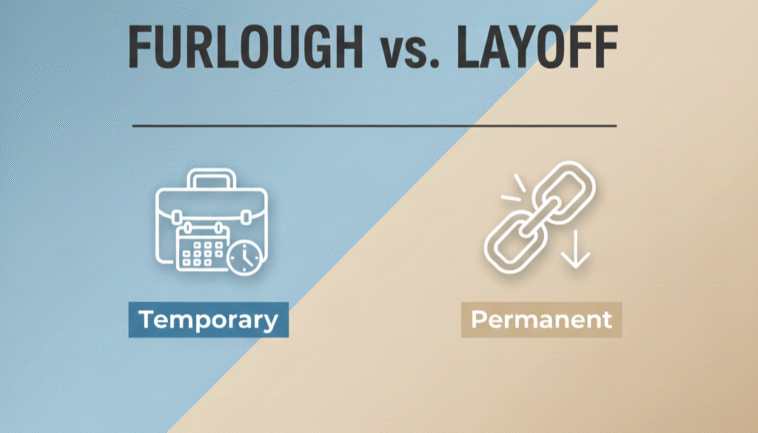
A furlough is typically a temporary, unpaid leave of absence initiated by the employer. Workers remain employed but stop working for a defined or undefined period. The intention is usually to bring employees back when financial or operational conditions improve.
A layoff, on the other hand, is a termination of employment due to business reasons rather than employee performance. Layoffs can be temporary or permanent, but in most practical cases, they represent a more serious separation between the worker and the company.
The difference between furlough vs layoff lies primarily in employment status, benefits continuation, and expectations of return.
What Is a Furlough? (Furlough Meaning Explained)
A furlough is best described as a pause, not a goodbye.
During a furlough, employees are placed on unpaid or partially paid leave. They are still technically employed, but they are not working their regular hours. Some furloughs reduce hours or schedules instead of eliminating work entirely. Others may require workers to stop all job duties for a set number of weeks or months.
Employers usually implement furloughs to cut costs without permanently losing skilled staff. This approach allows companies to survive temporary downturns while preserving institutional knowledge and team structure.
From a worker’s perspective, a furlough often feels like standing in a waiting room. You still belong to the company, but income and certainty are disrupted.
What Is a Layoff? (Layoff Meaning Explained)
A layoff is more decisive and more disruptive.
When you are laid off, your employment officially ends. The employer no longer provides work, salary, or guaranteed reinstatement. While some layoffs are labeled “temporary,” many become permanent in practice.
Layoffs typically happen when businesses restructure, outsource operations, shut down departments, or face long-term financial pressure. The company determines that certain roles are no longer viable in their current form.
For workers, a layoff triggers immediate changes: loss of wages, possible loss of benefits, and the need to actively seek new employment.
Furlough vs Layoff Differences at a Glance
The core furlough vs layoff differences revolve around status, expectations, and support.
With a furlough, you usually remain on the company’s books. With a layoff, your employment ends.
With a furlough, there is often an intention to recall employees. With a layoff, there is no guaranteed return.
With a furlough, benefits like health insurance may continue. With a layoff, benefits often end or transition to temporary continuation programs.
With a furlough, professional identity remains linked to your employer. With a layoff, your career becomes immediately open-ended.
These distinctions shape everything from financial planning to mental health and job-search urgency.
How Furloughs Affect Pay, Benefits, and Job Security
One of the most confusing aspects of furlough vs layoff is compensation.
Most furloughed employees do not receive wages for the hours they are not working. Some companies, however, offer partial pay, rotating schedules, or limited stipends. This makes it crucial to read official documentation carefully.
Benefits treatment during a furlough varies widely. Many employers continue health insurance, retirement contributions, and accrued leave. Others require employees to cover premiums out of pocket. Knowing what continues and what doesn’t can prevent costly surprises.
In terms of job security, furloughs signal uncertainty but also possibility. You may be called back quickly, or the furlough may eventually convert into a layoff if business conditions fail to recover.
How Layoffs Affect Pay, Benefits, and Job Security
A layoff creates a more immediate financial and professional break.
Pay stops entirely after the final paycheck. Some companies offer severance packages based on tenure, role, or local regulations. These packages may include extended pay, health coverage, or outplacement services.
Benefits often end shortly after termination, though workers may be eligible for continuation programs. Retirement plans may be rolled over or accessed under certain conditions.
Job security after a layoff no longer depends on your former employer. It depends on your ability to reposition yourself in the job market.
Unemployment Benefits: Furlough vs Layoff Eligibility
A critical practical question in any furlough vs layoff scenario is unemployment benefits.
In many regions, furloughed workers may qualify for unemployment benefits because they are not receiving wages, even though they remain employed. Eligibility depends on reduced hours, unpaid status, and government rules.
Laid-off workers almost always qualify for unemployment benefits, assuming they meet work-history requirements and were not terminated for misconduct.
Understanding how to apply, what documentation you need, and how benefits interact with severance or partial pay can significantly affect your financial stability.
Real-World Examples: How Companies Use Furloughs and Layoffs
Consider a hospitality company experiencing a seasonal downturn. Instead of firing staff, it may furlough front-desk and event teams for three months. Workers retain benefits and return when travel demand rebounds.
Now consider a manufacturing firm relocating production overseas. Entire departments may be laid off because their roles no longer exist locally. Employees receive final pay and severance but must find new work.
These examples highlight how furloughs respond to temporary disruptions, while layoffs often reflect structural changes.
Pros and Cons for Workers: Furlough vs Layoff
From a worker’s point of view, neither option is ideal, but each has distinct advantages and disadvantages.
A furlough allows you to maintain a formal relationship with your employer. This can preserve seniority, benefits, and internal career opportunities. It may also reduce the emotional toll of a complete separation.
However, furloughs can trap workers in prolonged uncertainty. You may delay a job search hoping to be recalled, only to face a layoff months later when hiring markets have shifted.
A layoff, while more painful initially, offers clarity. You know where you stand. You can fully commit to finding new opportunities, retraining, or even changing industries.
Yet layoffs can damage financial stability, disrupt health coverage, and shake professional confidence.
Understanding these trade-offs is central to navigating furlough vs layoff situations strategically.
Psychological and Career Impact on Workers
Beyond finances, furloughs and layoffs affect identity and motivation.
Furloughed workers often report anxiety, isolation, and loss of routine. The absence of clear timelines can create chronic stress. On the positive side, furloughs can offer space to upskill, freelance, or reassess career goals.
Laid-off workers may experience grief, anger, or fear. Yet many also describe a sense of momentum. With the door closed, energy shifts toward reinvention.
From a career standpoint, furloughs preserve continuity, while layoffs create inflection points. Neither outcome defines your long-term success, but both require emotional and strategic adaptation.
What to Do If You Are Furloughed
If you are furloughed, treat the situation as both a pause and a preparation phase.
Start by clarifying terms. Ask HR about expected duration, benefit continuation, communication schedules, and recall procedures.
Next, stabilize finances. Review your budget, reduce discretionary spending, and explore unemployment benefits or short-term assistance programs.
Then, invest in yourself. Update your resume, strengthen your professional network, and build new skills aligned with market demand. Even if you return, these upgrades increase resilience.
Finally, maintain connection. Stay in touch with colleagues and supervisors without crossing professional boundaries. Visibility can matter when recalls occur.
What to Do If You Are Laid Off
If you are laid off, immediate structure helps restore control.
Secure documentation, including termination letters, benefit notices, and severance agreements. Understand deadlines and conditions.
Apply for unemployment benefits as soon as possible. Delays can cost you weeks of support.
Shift quickly into job-search mode. Refresh your resume, optimize your professional profiles, and inform your network of your availability. Many roles are filled through referrals rather than job boards.
At the same time, protect your mental health. A layoff is a business decision, not a personal verdict. Creating daily routines, physical activity, and social interaction can preserve confidence during transition.
Financial Planning in Furlough vs Layoff Situations
Money management becomes a survival skill when income is disrupted.
Start with a cash-flow snapshot. List essential expenses, available savings, and expected benefits. This gives you a realistic runway.
Explore income alternatives. Freelancing, consulting, tutoring, or short-term contracts can bridge gaps without locking you into permanent commitments.
Review insurance needs. Health coverage, disability protection, and emergency funds become especially important.
Avoid high-interest debt unless absolutely necessary. Short-term relief can become a long-term burden if not managed carefully.
Legal and Rights Considerations for Workers
Understanding your rights is a core element of furlough vs layoff literacy.
In many jurisdictions, employers must follow notice requirements, especially in large-scale layoffs. There may be obligations related to severance, final pay timing, or benefit continuation.
Furloughed workers often retain certain rights, such as seniority accrual or access to internal postings, depending on company policy and local law.
If circumstances feel unclear or unfair, consulting a labor professional or legal advisor can prevent costly mistakes.
Common Pitfalls Workers Should Avoid
One major mistake is assuming a furlough guarantees return. While many furloughs do end positively, some evolve into permanent layoffs. Preparing quietly protects you without signaling disloyalty.
Another pitfall is disengagement. Whether furloughed or laid off, withdrawing from professional communities reduces future opportunities.
A third risk is reactive decision-making. Accepting the first option out of fear, draining retirement funds unnecessarily, or ignoring retraining opportunities can limit long-term outcomes.
Awareness transforms disruption into strategic transition.
Mini-Summary: Furlough vs Layoff for Workers
Furloughs are temporary employment pauses designed to reduce costs while preserving jobs. Layoffs are employment terminations driven by longer-term business decisions.
Furloughs may preserve benefits and return options but bring uncertainty. Layoffs remove immediate ties but open clearer paths forward.
Both situations demand financial discipline, emotional resilience, and proactive career management.
Understanding the differences empowers workers to respond with strategy rather than panic.
The Bigger Picture: Why This Distinction Matters
In today’s volatile economy, job stability is no longer binary. Workers move through phases of engagement, disruption, and reinvention. Knowing the real meaning of furlough vs layoff equips you to decode corporate language, protect your interests, and make informed choices.
Rather than viewing these events as endings, many professionals now frame them as transitions. With preparation and perspective, both furloughs and layoffs can become catalysts for smarter, more resilient careers.
Conclusion
Furlough vs layoff is not merely a technical distinction. It shapes your income, benefits, career planning, and emotional well-being. A furlough signals temporary disruption and potential return. A layoff marks separation and demands reinvention.
Neither outcome defines your value or limits your future. What matters is how you respond. By understanding your rights, stabilizing your finances, maintaining professional momentum, and investing in adaptability, you transform uncertainty into agency.
In an era where change is constant, informed workers are empowered workers. Whether you are facing a furlough, recovering from a layoff, or simply preparing for the unexpected, clarity is your strongest career asset.
FAQs
1. What is the main difference between furlough vs layoff?
The main difference is employment status. In a furlough, you remain employed but temporarily stop working. In a layoff, your employment ends, and there is no guaranteed return.
2. Can furloughed workers apply for unemployment benefits?
In many regions, yes. If your hours are reduced or your pay stops, you may qualify for unemployment benefits, even though you are still officially employed.
3. Does a furlough always turn into a layoff?
No. Many furloughs end with employees returning to work. However, if business conditions fail to improve, some furloughs may eventually lead to layoffs.
4. Which is better for workers: furlough or layoff?
Neither is ideal. Furloughs may preserve benefits and job ties, while layoffs provide clarity and the ability to fully pursue new opportunities. The “better” option depends on financial stability, career goals, and market conditions.
5. How should I prepare financially for furlough vs layoff situations?
Build an emergency fund, reduce fixed expenses, understand your benefits, and explore alternative income options. Preparation increases resilience regardless of which outcome occurs.
6. Is severance pay guaranteed in a layoff?
No. Severance depends on company policy, employment contracts, and local labor laws. Some employers offer it voluntarily, while others are only required to provide final wages and accrued benefits.
7. Can a furloughed employee look for another job?
Yes. Furloughed workers are generally free to seek temporary or permanent employment elsewhere, unless restricted by contract terms.