

 ravi
ravi

Starting a business in India begins with proper business registration and legal compliance. In 2026, the Indian regulatory environment is more digital, but compliance requirements are still complex. Registering your business the right way helps you avoid penalties, access funding, and operate smoothly across states.
This guide explains the step-by-step process for business registration in India, along with required licenses, compliance obligations, and how a legal compliance consultant in India like Compliance Doctor can simplify the entire journey.
Why Business Registration in India Is Important
Business registration in India gives your company a legal identity. It allows you to:
Open a current bank account
Obtain GST and other licenses
Enter contracts legally
Raise investment and apply for government schemes
Stay compliant with Indian laws
Without registration, businesses risk heavy penalties, closure notices, and legal action.
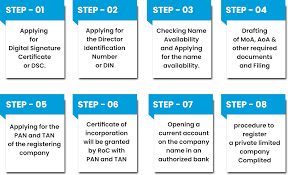
Step 1: Choose the Right Business Structure
The first step in business registration in India is selecting a suitable legal structure.
Common Business Structures in India
Private Limited Company — Ideal for startups and scalable businesses
Limited Liability Partnership (LLP) — Suitable for professionals and SMEs
One Person Company (OPC) — For solo founders
Sole Proprietorship — Small, low-risk businesses
Partnership Firm — Traditional joint businesses
A compliance consulting firm in India can help evaluate taxation, compliance burden, and growth plans before choosing.
Step 2: Obtain Digital Signature Certificate (DSC)
A Digital Signature Certificate (DSC) is mandatory for:
Company incorporation
MCA filings
Income tax filings
Directors and partners must obtain a Class 3 DSC from a government-authorized certifying authority.
Step 3: Apply for Director Identification Number (DIN)
Anyone becoming a director must apply for a Director Identification Number (DIN) through the Ministry of Corporate Affairs (MCA).
DIN is required for:
Incorporation forms
Annual ROC compliance
Changes in directorship
Step 4: Name Approval via MCA Portal
Business names must be:
Unique
Not similar to existing companies or trademarks
Compliant with Companies Act rules
Name approval is done through the SPICe+ form on the MCA portal. A legal compliance consultant India ensures faster approval by avoiding common rejection reasons.
Step 5: Company Incorporation Filing
Once the name is approved, incorporation documents are submitted:
Memorandum of Association (MOA)
Articles of Association (AOA)
Director & shareholder details
Registered office proof
After verification, the Certificate of Incorporation (COI) is issued.
This marks the official completion of business registration in India.
Step 6: Business License Registration in India
Registration alone is not enough. Most businesses require mandatory licenses based on activity and location.
Common Business Licenses in India
GST Registration
Shop & Establishment Act License
Trade License (Municipal)
FSSAI License (Food businesses)
MSME / Udyam Registration
Professional Tax Registration
A business license registration expert ensures you obtain only relevant licenses — no over-compliance, no penalties.
Step 7: Open Current Bank Account
With the Certificate of Incorporation and PAN:
Open a current account
Enable digital payments
Receive client and investor funds
Banks often require proof of business license compliance in India.
Step 8: Post-Registration Legal Compliance
Many businesses fail not at registration — but at post-incorporation compliance.
Mandatory Ongoing Compliances
ROC filings (AOC-4, MGT-7)
GST returns
Income tax returns
Labour law registrations (if applicable)
License renewals
This is where a compliance consulting firm India plays a critical role.
Why Choose Compliance Doctor for Business Registration?
Compliance Doctor provides end-to-end business registration and license compliance services across India.
What Compliance Doctor Offers
Business structure advisory
Company & LLP registration
Business license registration
Ongoing compliance management
Dedicated legal compliance consultant
Their process-driven approach reduces delays, errors, and future penalties.
Common Mistakes to Avoid During Business Registration
Choosing the wrong legal structure
Skipping mandatory licenses
Missing post-registration compliance
DIY registration without expert review
Ignoring state-specific laws
Working with a legal compliance consultant India helps avoid these costly mistakes.
Business License Compliance in India (2026 Update)
In 2026, Indian regulators are actively:
Linking databases (GST, MCA, Labour)
Issuing automated notices
Enforcing penalties for non-compliance
Business license compliance in India is no longer optional — it’s essential for survival.
Final Thoughts
Business registration in India is more than paperwork — it’s the foundation of a legally compliant and scalable business. From selecting the right structure to managing licenses and ongoing filings, expert guidance makes a real difference.
Partnering with a trusted compliance consulting firm India like Compliance Doctor ensures your business stays compliant, penalty-free, and growth-ready.
Frequently Asked Questions (FAQs)
What is the cost of business registration in India?
Costs vary based on structure, government fees, and licenses. Private Limited Company registration typically costs more than LLP or proprietorship.
Is GST mandatory for all businesses?
No. GST is mandatory only if turnover crosses the threshold or for certain business types.
How long does business registration take in India?
With expert help, registration usually takes 7–15 working days, excluding licenses.
Can I register a business without a compliance consultant?
Yes, but errors and missed compliances often lead to penalties. A legal compliance consultant India reduces risk.
Do I need licenses after registration?
Yes. Most businesses require multiple licenses for legal operation and compliance.