
 Liam Hartwell
As affordability pressures grow, Ontario’s October 26 municipal election is an opportunity to look beyond race, religion, caste and familiar names—and ask who can deliver meaningful change.
By Trending Canada Editorial Desk | October 25, 2026
Tomorrow, Monday, October 26, communities across Ontario will head to the polls to elect the people who will help shape their municipalities for the next four years.
For many Canadians, the decision comes at a difficult time.
The cost of maintaining a household has become a serious concern. Families are reviewing their expenses more carefully, young professionals are questioning whether homeownership will ever be within reach, students are struggling to balance education with living costs, and seniors are trying to maintain financial stability.
According to Statistics Canada, consumer prices increased 3.1% year over year in September 2026. Although inflation does not tell the entire story of household affordability, it is another reminder of the financial pressures many residents continue to experience.
These struggles are not limited to any particular race, religion, caste, birthplace or cultural community.
They are shared by Canadians trying to build a stable and comfortable life.
And that brings us to a question every voter should consider:
When life has become this expensive, can we afford to choose our leaders for reasons other than their ability to serve?
This election is not about choosing Canada’s federal or provincial government. It is about choosing municipal representatives whose decisions can influence property taxes, housing approvals, local infrastructure, transit, public spaces and the delivery of essential community services.
These responsibilities may sound ordinary, but their impact on daily life is anything but small.
We Need to Look Beyond Identity Without Dismissing It
Canada’s strength has always included its diversity.
People have arrived from different parts of the world, bringing different languages, cultures, religions, experiences and perspectives. These communities have contributed to the country through businesses, education, public service, healthcare, volunteering and generations of hard work.
Representation matters. Understanding the experiences of different communities can help make government more inclusive and responsive.
But representation and responsible leadership are not the same thing.
A candidate should not receive someone’s vote simply because they share a surname, speak the same language, belong to the same religious community or come from the same ancestral region.
Equally, no candidate should be dismissed because their background is unfamiliar or different.
The question is not whether a candidate comes from our community. The question is whether that candidate is prepared to serve the entire community.
Can they represent a family that does not look like theirs? Can they listen to people who disagree with them? Can they balance competing priorities fairly? Can they make difficult financial decisions without losing sight of the residents affected by them?
These are the questions that should guide an election.
Our cities do not need more divisions between communities. They need people capable of bringing communities together to solve common problems.
Beyond the Campaign Posters: People Stepping Forward to Serve
Throughout this election period, Trending Canada has been following the journeys and public campaigns of individuals who have stepped forward to seek municipal office.
Campaigns involve considerable effort. Candidates and volunteers spend time meeting residents, knocking on doors, organizing neighbourhood conversations and explaining what they hope to accomplish.
That willingness to participate in public life deserves recognition, regardless of political affiliation.
But commitment to campaigning is only a starting point. Earning public trust also requires credible plans, relevant experience, accountability and the ability to work with others after election day.
Across Toronto, Waterloo, Brampton and Cambridge, seven campaigns we have examined offer different approaches to some of the challenges facing local communities.
These are not the only candidates standing for election, and their inclusion here should not be interpreted as an endorsement or a ranking. Voters should review the full candidate list in their municipality before making a decision.
Husain Neemuchwala — Toronto City Council, Ward 10, Spadina–Fort York

In Toronto’s Spadina–Fort York neighbourhoods, rapid development has transformed the way people live and move through the city.
Condominium communities, established residential areas, local businesses, transit routes and busy public spaces all place different demands on municipal services.
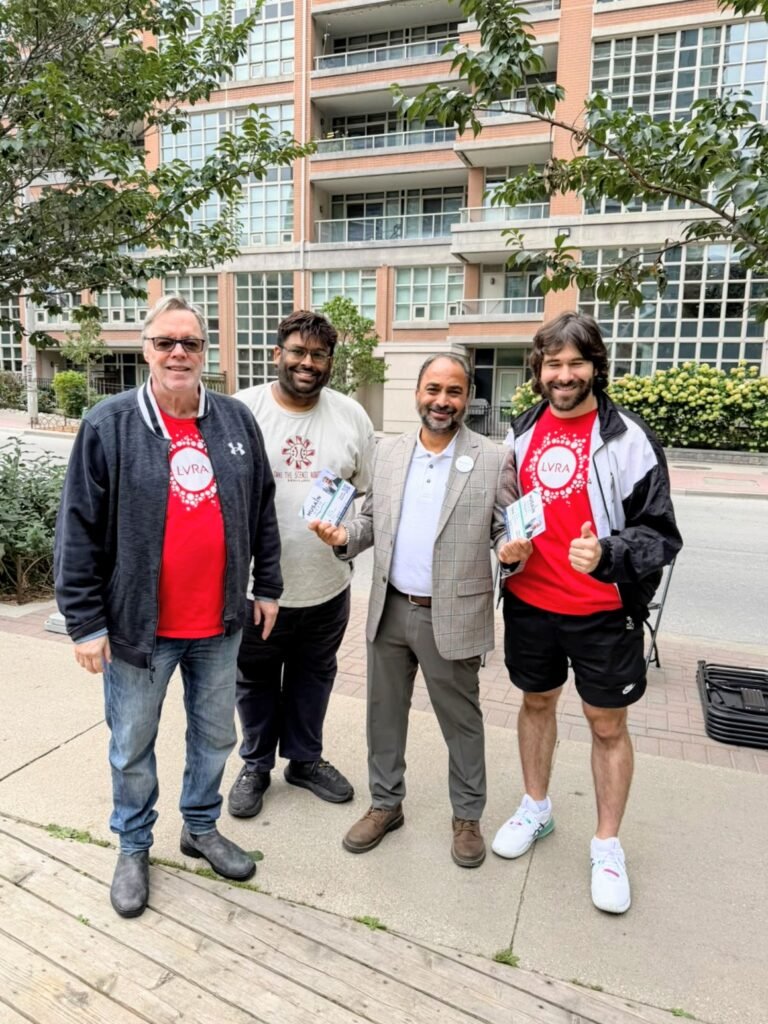
Husain Neemuchwala, also known as Husain Neem, is running for City Council in Ward 10.
His campaign focuses on what it calls the T.H.I.S. plan: Transit, Housing, Infrastructure and Safety.
The priorities include reliable and accessible transit, housing affordability and stability, better coordination of construction, improved maintenance of public spaces and neighbourhood-specific approaches to safety.
Neemuchwala also describes a background in entrepreneurship and community organizing.
His campaign reflects an important reality of municipal representation: local leadership frequently involves problems that residents encounter every day.
A delayed streetcar, poorly maintained public space or construction project that creates repeated disruption can affect thousands of people.
The relevant question for voters is how a proposed neighbourhood-focused agenda would translate into specific actions at City Hall.
What can a ward councillor accomplish directly? Which improvements require cooperation with other councillors or agencies? How would progress be measured?
These questions are particularly important in densely populated neighbourhoods where expectations for municipal services continue to grow.
Brad Bradford — Toronto Mayoral Candidate
Toronto is one of Canada’s most economically important cities, but the pressures facing its residents are substantial.
Housing affordability, congestion, public safety, infrastructure and municipal spending are recurring subjects of debate.
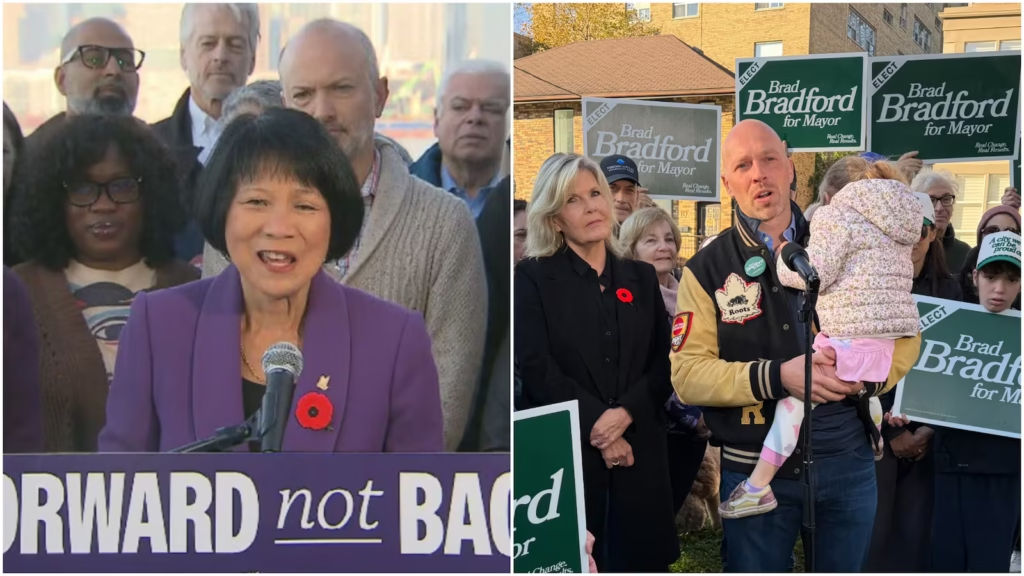
Brad Bradford, a Toronto city councillor seeking the mayor’s office, has organized his campaign around three central concerns: crime, congestion and cost.
His published proposals include a one-year property-tax freeze, changes to the municipal land transfer tax for eligible homebuyers, lower household water bills, additional frontline police officers, transit reliability measures and an initiative intended to encourage youth employment.
The campaign has also presented cost estimates and proposed funding approaches for several commitments.
Those details give voters something concrete to examine. A promise to reduce a particular tax, for example, is more useful for public debate when residents can also see the estimated cost and the proposed way to fund it.
However, every significant proposal deserves scrutiny. Residents should ask whether projected savings are realistic, what trade-offs may be necessary and how essential services would be protected.
Toronto needs leadership that can address affordability and safety while managing the financial consequences of its decisions.
Bradford’s campaign puts those issues at the centre of its argument. It is now up to voters to assess the feasibility of his proposals alongside those of other mayoral candidates.
Sarvesh Pratap Singh — Waterloo Regional Councillor Candidate
Municipal politics is sometimes discussed primarily through the names of mayors, but regional councils make decisions that affect essential services across multiple communities.
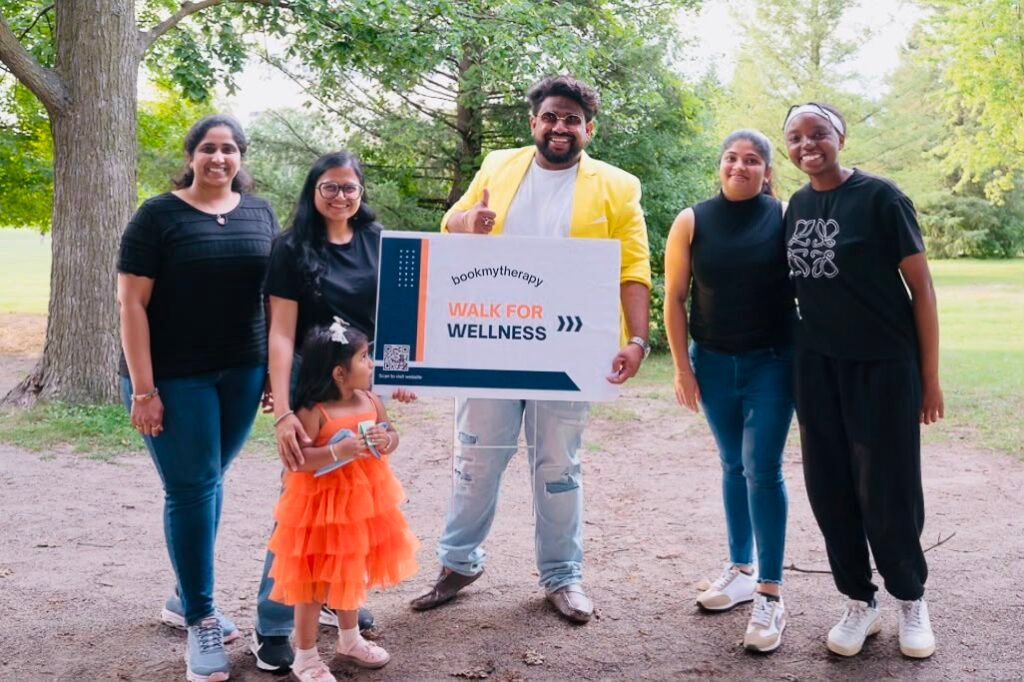
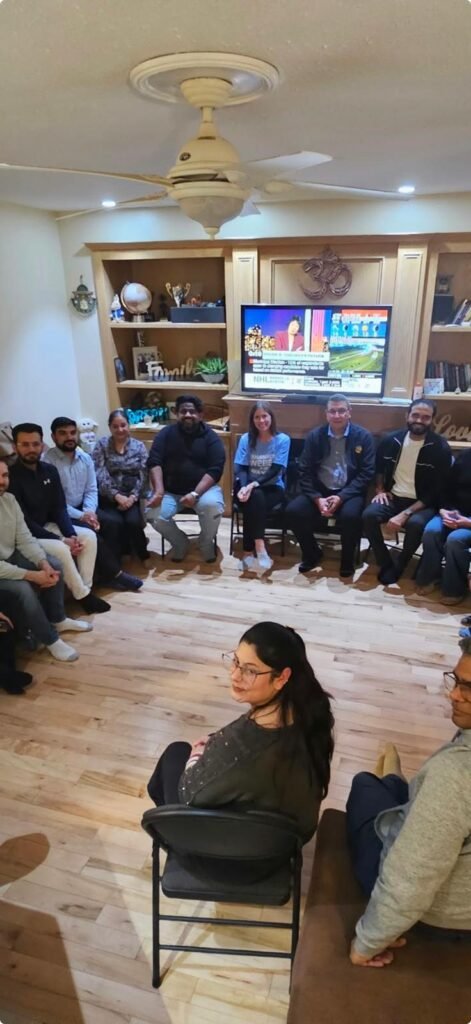
Sarvesh Pratap Singh is running for Regional Councillor representing Waterloo.
His campaign draws on his professional experience in human resources and his involvement in community initiatives.
According to his published biography, Singh has participated in programs connecting newcomers and graduates with employment resources, contributed to local community engagement and volunteered in the long-term care sector.
His stated priorities include attainable housing, public transportation, community safety, support for seniors, environmental protection, youth opportunities and responsible regional growth.
One notable aspect of his campaign is its emphasis on listening and community participation.
That is relevant in a region where students, young families, long-term residents, newcomers and seniors may have different immediate needs but share an interest in reliable public services.
Regional representation also requires setting priorities when resources are limited.
Voters should examine which of Singh’s goals come with clear implementation steps, how he would work with municipalities across the region and how he would balance affordability against the cost of needed services.
Community involvement provides useful experience. The challenge of elected office is converting that experience into effective regional policy.
Shannon Weber — Waterloo Mayoral Candidate
Waterloo is a city associated with education, entrepreneurship and innovation, but it also faces growing questions about affordability and the cost of municipal services.
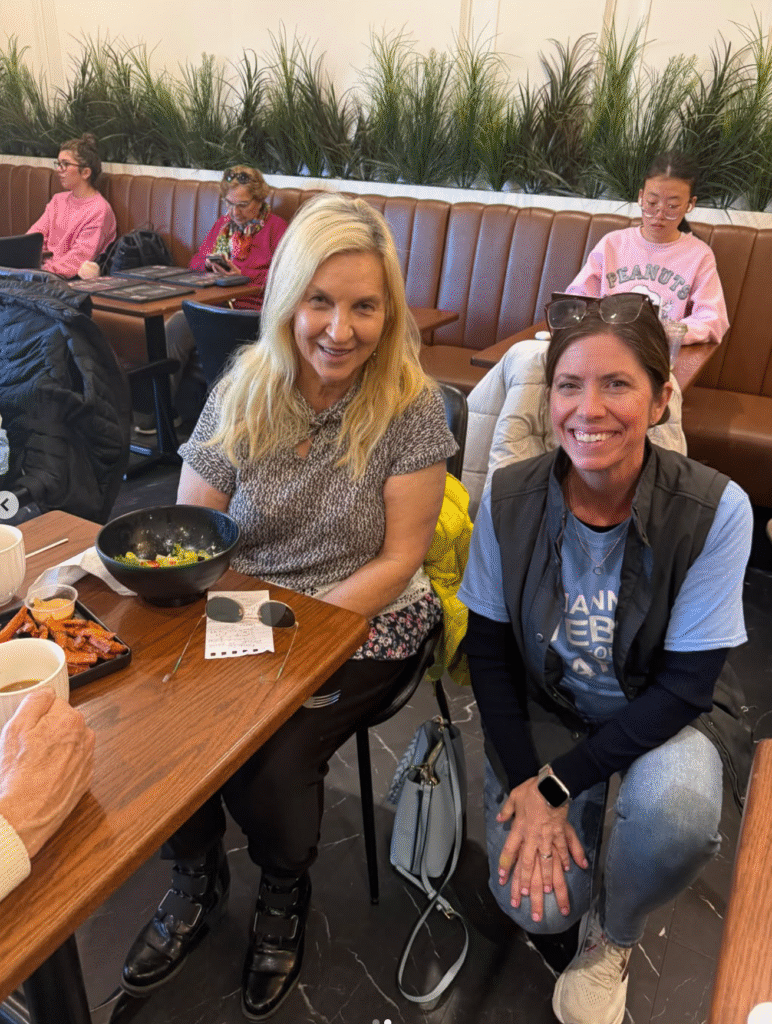
Shannon Weber is seeking the office of mayor with a campaign centred on responsible spending, housing, reliable municipal services and accountable leadership.
Her published plan proposes closer scrutiny of discretionary municipal spending, annual value-for-money reviews and an objective of keeping city property-tax increases as close to inflation as possible while protecting essential services.
She also addresses everyday concerns such as road maintenance, snow clearing, neighbourhood parks, housing approval processes and the need for better communication between municipal government and residents.
Her campaign emphasizes previous leadership and community experience across multiple sectors.
There is a larger conversation behind these proposals.
Residents understandably want lower costs, but they also expect roads to be maintained, recreation facilities to function, neighbourhoods to remain safe and infrastructure to keep pace with growth.
Delivering both affordability and dependable services requires careful budgeting rather than promises alone.
For Waterloo voters, Weber’s platform offers a basis for examining how the next mayor would set priorities, explain spending decisions and maintain services.
The central test is whether proposed savings, efficiencies and service improvements can work together in practice.
Nayan Brahmbhatt — Brampton City Councillor Candidate, Wards 7 and 8
Economic opportunity is not an abstract issue for the owners of small businesses, local employers or residents looking for stable employment.
It influences whether neighbourhood businesses survive, whether investment reaches growing communities and whether people have opportunities close to home.
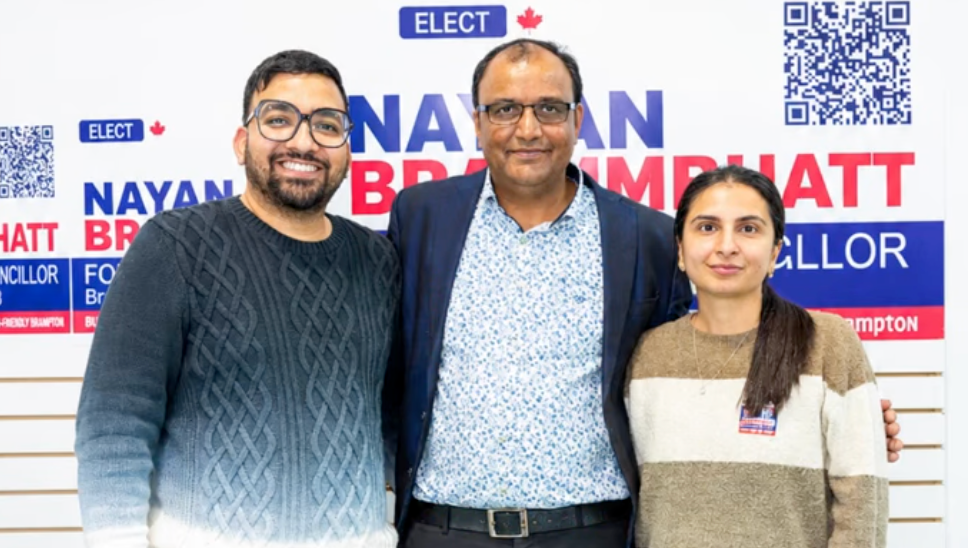
Nayan Brahmbhatt is seeking a City Council seat representing Brampton’s Wards 7 and 8.
His campaign describes his experience in business consulting, investment strategy, international trade and community engagement.
His stated priorities include fiscal responsibility, safer communities, traffic and infrastructure improvements, attracting investment and supporting small businesses.
These subjects are relevant to a growing city where transportation, employment and commercial development are closely connected.
A business-oriented perspective can contribute to municipal decision-making, particularly when councils must consider development, taxation and economic growth.
But business experience alone does not guarantee effective public leadership.
Voters should look for details about how proposed economic policies would help local businesses, improve infrastructure or produce measurable benefits for residents.
They should also consider how a candidate would balance commercial growth with the needs of neighbourhoods, families and public services.
The value of municipal economic policy should ultimately be judged by the opportunities and quality of life it helps create.
Jagruti Bhatt — Brampton Mayoral Candidate
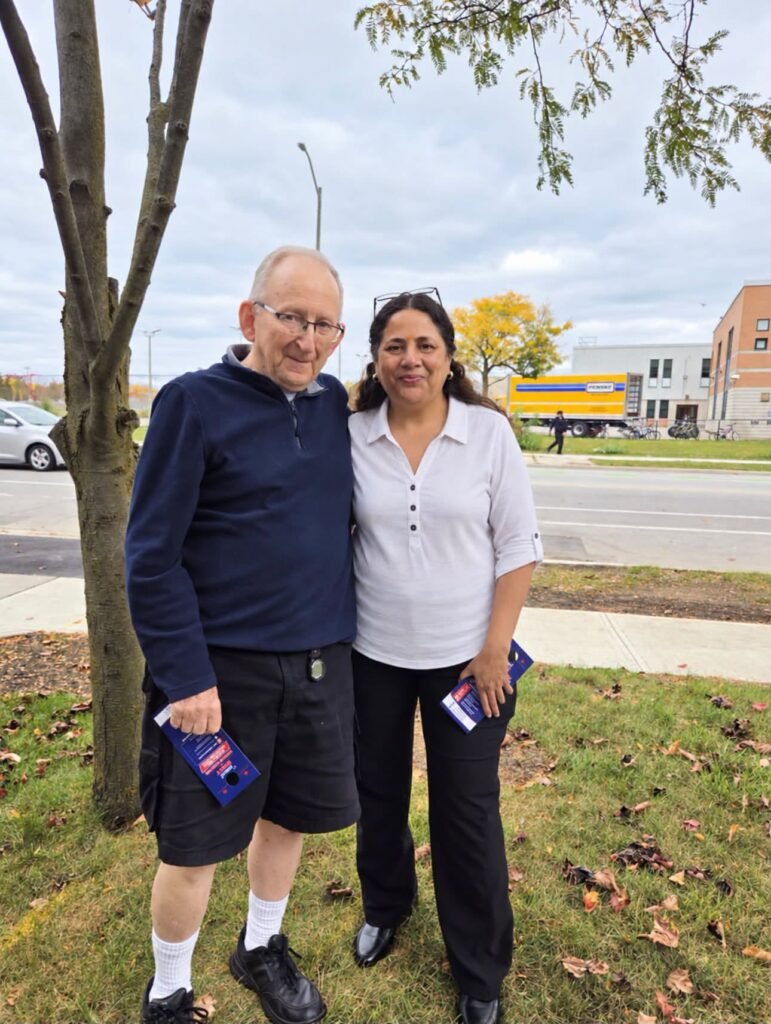
Brampton has experienced significant growth and continues to face questions about infrastructure, healthcare access, public safety, housing and opportunities for young people.
Jagruti Bhatt is seeking the office of mayor.
Her campaign describes years of community involvement supporting women, families, seniors, newcomers and individuals experiencing difficult circumstances.
Her published biography also describes her role in the COVID Food Vahini initiative, through which volunteers provided meals, groceries and essential supplies to people in need during the pandemic.
These are accounts presented by the campaign and are relevant experiences for voters to examine.
Her election priorities include community safety, affordable living, greater transparency at City Hall, support for seniors, youth opportunities and local business growth.
The campaign has also raised questions about Brampton’s second hospital project and proposed an alternative approach to certain residential occupancy enforcement issues.
These concerns reflect conversations many Brampton residents are having about the pace of the city’s development and the pressure on public services.
At the same time, voters should distinguish municipal responsibilities from those primarily controlled by the province or other institutions. A mayor can advocate, negotiate and help coordinate investments, but cannot independently deliver every healthcare or affordability commitment.
Bhatt’s community-service background and stated priorities are part of her case for leadership. Voters must decide whether her proposals offer a realistic path to improving municipal governance and services.
Prakash Venkataraman — Waterloo Regional Councillor Candidate, Cambridge
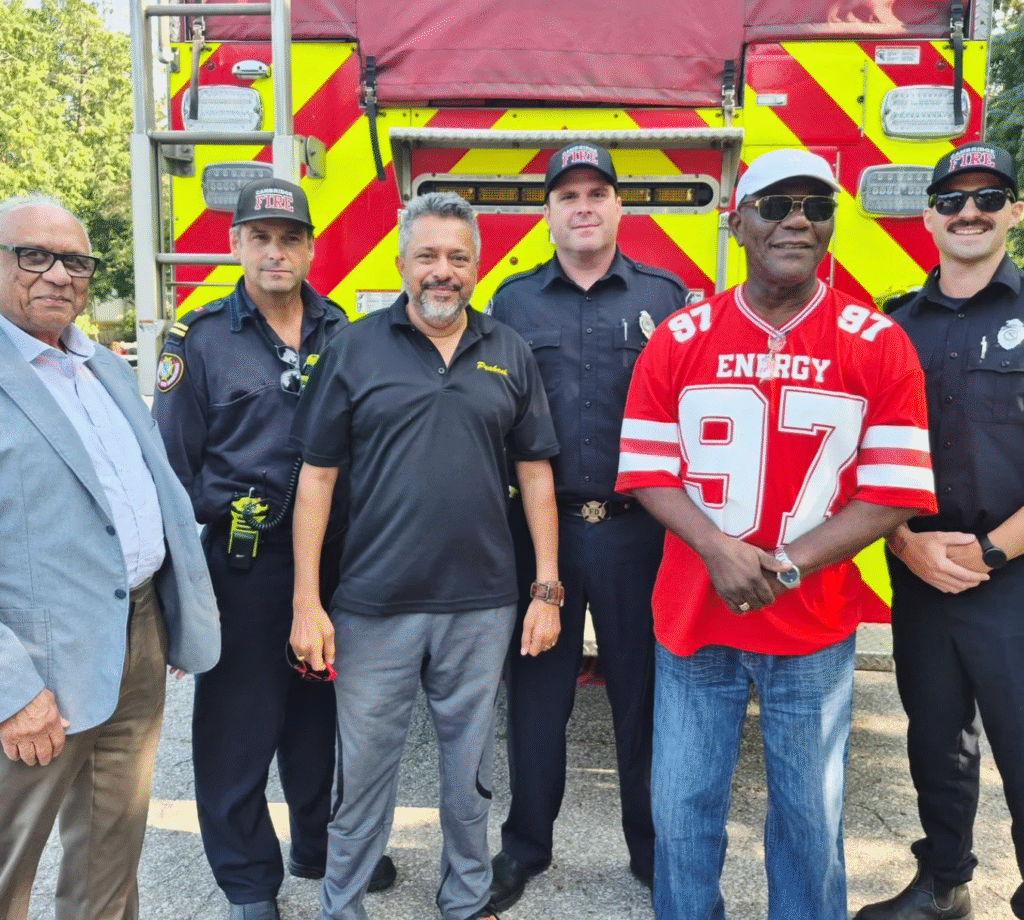
Cambridge is a growing community with significant demands on transportation, infrastructure, public services and regional investment.
Prakash Venkataraman is seeking election as one of Cambridge’s representatives on Waterloo Regional Council.
His campaign describes more than 25 years of living in Cambridge, extensive volunteer involvement and decades of business and executive leadership experience.
It places particular emphasis on responsible spending, transparency, improved services and securing what the campaign describes as Cambridge’s fair share of regional investment.
Published priorities include keeping property-tax pressures under control, ensuring major projects demonstrate value, supporting attainable housing, strengthening transportation and infrastructure, and seeking additional provincial and federal funding where appropriate.
Venkataraman also highlights support for seniors, youth, families, small businesses and residents facing challenges related to housing, mental health and addiction.
His campaign draws attention to a familiar issue in regional government: how resources are allocated among growing municipalities with different needs.
The question is not simply whether a candidate will advocate strongly for Cambridge. It is how that advocacy will produce workable decisions while maintaining cooperation across Waterloo Region.
Voters should examine the proposed funding approaches, the powers available to regional councillors and the candidate’s ability to build support for practical outcomes.
What These Campaigns Tell Us About the Election
The seven individuals profiled above have different professional backgrounds, experiences and political priorities.
They are seeking different offices, representing different communities and campaigning on different combinations of local issues.
Yet their platforms reveal a common set of concerns: affordability, public safety, housing, infrastructure, transportation, responsible spending and opportunities for residents.
These are not problems restricted to a particular cultural community.
When a road is damaged, everyone using it is affected.
When a neighbourhood lacks accessible services, the consequences extend across backgrounds and generations.
When a small business closes, the loss affects its owner, employees, customers and surrounding neighbourhood.
And when municipal government fails to plan responsibly for growth, the costs can be felt for years.
That is why voters should examine both the people seeking office and the policies they are proposing.
A candidate may be deeply committed to public service but lack a workable plan.
Another may offer a detailed platform but struggle to demonstrate the leadership and cooperation required to implement it.
Some candidates bring experience in elected office. Others bring experience in business, public administration, volunteering or community organizations.
None of those backgrounds should automatically qualify or disqualify anyone.
The standard should be consistent: credibility, competence, integrity, inclusiveness and the ability to deliver within the responsibilities of the office.
A Message to Undecided Voters: You Do Not Need to Agree With Everything
Many voters reach the day before an election without having made a final decision.
Some feel that no candidate fully represents their priorities. Others find competing promises difficult to compare. Some are disappointed by past governments or feel that elections rarely produce noticeable improvements.
Those concerns are understandable.
But waiting for a perfect candidate is unlikely to resolve them.
A more useful approach is to identify the problems that matter most in your daily life and compare how the candidates propose to address them.
Before making your decision, consider a few practical questions:
- Affordability: What does the candidate propose to do about costs that municipal government can actually influence?
- Experience: What has the candidate done before seeking office, and how relevant is that experience to the position?
- Feasibility: Are their commitments realistic, properly explained and financially responsible?
- Accountability: How will residents know whether the candidate is delivering on those commitments?
- Representation: Will this person listen to and serve residents across the entire municipality or ward, including those who did not support them?
- Integrity: Does the candidate communicate honestly about limitations, trade-offs and disagreements?
An undecided voter does not need to become an expert in municipal law or public finance overnight.
Even taking a short amount of time to compare official candidate information, review key proposals and identify unresolved questions can lead to a more informed decision.
It is equally important to recognize that no mayor or councillor can single-handedly resolve inflation, national housing markets, interest rates or every pressure affecting household budgets.
Municipal leaders should not be blamed for everything beyond their control. Neither should they avoid accountability for the services, budgets and planning decisions within their authority.
Canada Is Bigger Than Our Differences
There is room in Canadian democracy for cultural pride, community identity and political disagreement.
People should feel free to celebrate where they come from and value leaders who understand their experiences.
What matters is that these connections do not become the only measure of political leadership.
A representative elected in Brampton must be prepared to serve all of Brampton.
A councillor in Toronto must consider the needs of everyone in the ward.
A regional councillor in Waterloo must weigh the interests of the wider region, not merely those of a familiar group or network.
And a mayor must be prepared to represent residents with different incomes, beliefs, languages, family structures and political opinions.
Public office is not a position of responsibility to one identity. It is a position of responsibility to the public.
We should recognize people who have invested their time in community service and those who are willing to take on difficult public responsibilities.
We should encourage more capable individuals to participate in local government.
But we must also be prepared to question every candidate, including the ones we admire.
Respect for community service and critical examination of political promises should go hand in hand.
Tomorrow, Think About the Canada We Want to Build
Election day provides an opportunity to consider not only who we are today, but what kind of communities we want to leave for the next generation.
Do we want municipalities where young people can imagine a future?
Where seniors feel supported?
Where working families can afford to live?
Where local businesses have opportunities to grow?
Where neighbourhoods are safe, connected and welcoming?
Where residents can question decisions without feeling ignored?
And where elected officials understand that serving the public is a responsibility rather than a privilege?
Those ambitions will not be achieved through one election or one individual.
They require capable public institutions, responsible decision-making, engaged residents and continuous accountability long after the campaign signs disappear.
On October 26, every eligible voter has an opportunity to participate in choosing that direction.
You do not have to vote for someone because they share your surname.
You do not have to vote for someone because your friends, family or cultural community support them.
And you do not have to dismiss someone whose background is different from yours.
Look at the person. Examine the work. Question the promises. Understand the responsibilities. Make the decision that best reflects your priorities and your hopes for your community.
Vote for your city. Vote for your region. Vote for a better Canada, beginning with the place you call home.
And whoever wins tomorrow should remember one simple responsibility:
You are being elected to serve everyone, not only those who voted for you.
Voting on October 26, 2026
Ontario’s municipal council and school board elections take place on Monday, October 26, 2026. Polls in Toronto, Brampton and Waterloo are scheduled to be open from 10 a.m. to 8 p.m.
Eligible municipal voters generally must be Canadian citizens aged 18 or older who meet the applicable municipal residency or property-based eligibility requirements. Bring acceptable identification showing your name and address. Consult your municipality’s election office for voting locations, registration assistance and local voting procedures.
For official information, visit the Ontario Municipal Elections Guide, Toronto Elections, Brampton Votes or your own municipality’s election website.
Editor’s note: This article is an independent editorial intended to encourage informed civic participation. The seven candidates featured are a selected group from Toronto, Brampton, Waterloo and Cambridge, not a complete list of candidates or a ranking. Candidate experience, biographical information and policy commitments have been summarized from publicly available campaign materials and should not be treated as independently verified achievements or guaranteed outcomes. Trending Canada’s inclusion of a candidate does not constitute an electoral endorsement. Readers are encouraged to review all candidates standing for election in their municipality.