

 Liam Hartwell

As Waterloo prepares for its October 26 municipal election, Sarvesh Pratap Singh is seeking to bring his experience in human resources, community engagement and volunteer service to Regional Council, with a focus on affordability, families and the future of the region.
By Trending Canada Editorial Desk | October 25, 2026
WATERLOO, ONTARIO — For many working families across Canada, the biggest concern today is not necessarily what politicians are saying. It is what happens when the bills arrive at the end of the month.
Housing costs, groceries, transportation, childcare and other everyday expenses have forced households to reconsider how they spend, save and plan for the future.
Waterloo Region is no exception.
While the region is widely recognized for its universities, growing technology sector, entrepreneurship and economic opportunities, residents are also navigating the challenges that come with an expanding population and increasing demands on infrastructure and public services.
Young professionals are looking for affordable places to live. Parents are balancing work and family responsibilities. Seniors need accessible services and opportunities to remain connected to their communities. Students and newcomers are trying to establish themselves in an increasingly competitive environment.
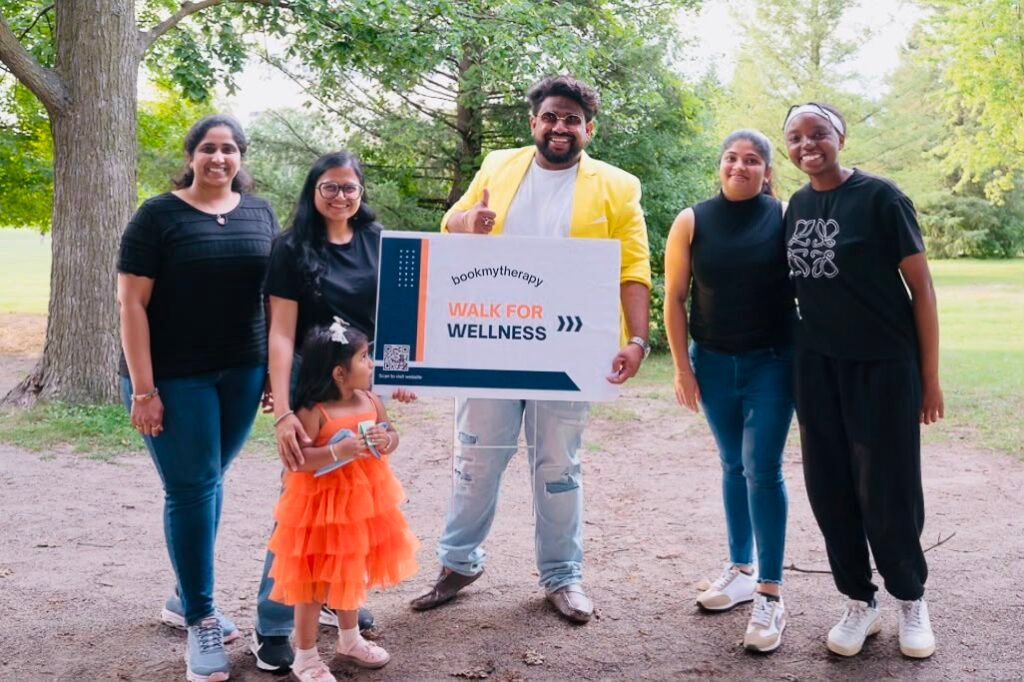
These are among the concerns that Sarvesh Pratap Singh, a candidate for Waterloo Regional Council, says have influenced his decision to enter municipal politics.
Unlike candidates whose careers have been built primarily around elected office, Singh presents himself as a working professional, husband, father and community volunteer who understands the responsibilities of everyday life.
His campaign emphasizes a simple principle: People Over Politics.
But as Waterloo voters prepare to elect two regional councillors from a field of seven candidates, the question is whether Singh’s professional experience, community involvement and proposed priorities offer a credible approach to the responsibilities of regional government.
A Working Professional Entering Public Life
Singh’s professional background is rooted in human resources, a field that requires an understanding of people, workplace challenges, organizational responsibilities and communication.
According to his published campaign biography, his career has involved promoting fair workplaces, encouraging transparency, supporting respectful dialogue and finding solutions through collaboration.
These experiences form an important part of the leadership approach he hopes to bring to public office.
Human resources professionals often work with people holding different perspectives and competing expectations. They are expected to listen carefully, understand concerns, apply policies consistently and help resolve disagreements.
There are similarities between these responsibilities and the expectations placed upon elected representatives.
Regional councillors must consider the needs of residents, evaluate staff recommendations, oversee public expenditures and make decisions that affect communities with different priorities.
However, professional experience outside government does not automatically guarantee success in elected office.
Public administration involves legislation, financial accountability, complex service-delivery systems and cooperation with multiple levels of government.
For Singh, the challenge would be demonstrating how his experience in people management and organizational collaboration could translate into practical decisions at Regional Council.
His campaign suggests that listening and building relationships would be central to that approach.
Community Involvement Beyond Election Season
One of the more notable aspects of Singh’s background is his reported involvement in community initiatives before seeking elected office.
His campaign biography describes volunteer work with WRConnectors, a community initiative focused on helping newcomers and graduates build professional relationships and access employment-related resources.
Finding meaningful employment is an important part of settling into a new community.
For newcomers, having qualifications or previous professional experience does not always make the transition into the Canadian labour market straightforward.
Access to professional networks, local employment information and community connections can make a difference.
Singh says his involvement with WRConnectors has included supporting individuals as they navigate these challenges.
His campaign also describes participation as a Neighbourhood Connector, helping bring residents together through community events and activities intended to strengthen relationships among neighbours.
In addition, Singh reports having served as a community representative on a City committee, contributing to conversations about local priorities.
These roles are relevant because municipal representatives regularly encounter residents who feel disconnected from decision-making.
People may understand their own neighbourhood challenges but be uncertain about which level of government is responsible or how to raise concerns effectively.
Community involvement can provide useful insight into those frustrations.
Still, voters should distinguish between participation in volunteer initiatives and measurable policy achievements.
The significance of Singh’s experience lies in what it may have taught him about community needs, how he would use that knowledge and whether it would help him make effective decisions if elected.
Supporting Seniors and Understanding Their Needs
Singh’s campaign also highlights volunteer involvement on the board of directors of a regional long-term care organization.
According to his biography, the experience contributed to his understanding of compassionate care, accessibility and the importance of supporting seniors with dignity.
This aspect of his background is particularly relevant to regional government.
Waterloo Region delivers services that include seniors’ housing and long-term care, making the experiences of older adults directly relevant to decisions made at the regional level.
For many families, questions surrounding long-term care extend beyond the availability of beds.
They include quality of care, staffing, accessibility, affordability, family involvement and the ability of older adults to maintain independence where possible.
Singh’s platform calls for stronger support for seniors, including accessible long-term care services and opportunities for aging in place.
These priorities address real policy areas, although their implementation would require decisions involving funding, staffing, provincial regulations and existing service providers.
If elected, Singh would have an opportunity to contribute to those discussions.
The important question is which improvements he would prioritize and how he would measure whether services were becoming more responsive to seniors and their families.
Why Regional Council Matters More Than Many Residents Realize
Municipal elections often attract attention because of mayoral races, but regional councillors also make decisions that can significantly influence everyday life.
The Region of Waterloo provides services across its municipalities, including public transit, major regional roads, affordable housing programs, public health, paramedic services, water and wastewater systems, waste management, employment supports and long-term care.
Regional Council helps establish the budgets, policies and strategic direction for these services.
For a resident travelling to work on Grand River Transit, a family seeking housing assistance or a senior depending on regional programs, these responsibilities are not abstract administrative matters.
They directly influence access to services and quality of life.
The decisions also involve financial trade-offs.
Expanding transit, maintaining infrastructure and strengthening community services can require substantial public investment.
At the same time, households and businesses are concerned about property taxes, user fees and the overall cost of government.
This is the environment in which Singh is seeking office.
His campaign identifies a range of priorities, but the real test for any regional councillor is deciding what should come first when resources are limited.
Housing Affordability: Can Families Still Build a Future Here?
Housing forms a central part of Singh’s campaign.
His published platform argues that working families, seniors and young residents should have access to housing options that allow them to remain in the region.
It also emphasizes responsible development and the importance of creating communities where residents can establish long-term roots.
Housing affordability is a complicated issue because it is influenced by factors beyond municipal government, including construction costs, financing conditions, the broader economy and provincial and federal policy.
Nevertheless, regional government has meaningful responsibilities involving affordable housing programs, housing supports and community planning.
Singh’s platform supports expanding housing options and balancing new development with existing community needs.
These are relevant objectives, but they require more specific consideration.
Would he prioritize investment in affordable housing projects, partnerships with nonprofit housing providers, improvements to regional housing services or other initiatives?
How would additional housing programs be financed?
And how would he determine whether the region’s investments were producing measurable improvements in affordability?
For voters, these questions matter because general support for affordable housing is relatively easy to express.
Achieving meaningful results requires difficult decisions about land, public investment, program eligibility and long-term operating costs.
Transportation: Connecting People to Opportunity
Reliable transportation is another major component of Singh’s platform.
For people who depend on transit, accessibility and affordability can directly affect their ability to reach employment, education, healthcare and other essential services.
Waterloo Region operates Grand River Transit, which includes bus services and the ION light rail system.
Singh proposes exploring more affordable transit fares, including reduced-fare opportunities for young people and seniors, while improving service reliability.
His approach recognizes that the cost of transportation can influence access to opportunity.
For students, young workers and people without private vehicles, dependable public transit can reduce barriers to employment and community participation.
However, lower fares must be considered alongside operating expenses, ridership, service frequency and infrastructure needs.
Regional councillors must balance transit affordability against the resources required to maintain or expand service.
Singh’s platform establishes the direction he wants to pursue, but voters should examine how he would address these financial considerations.
Protecting Farmland, Water and the Region’s Environment
While affordability and economic development are prominent in this election, Singh has also placed environmental protection among his priorities.
His campaign specifically highlights farmland, water resources and natural spaces.
Waterloo Region’s growth presents opportunities for housing, employment and investment, but development decisions can also affect agricultural land, infrastructure capacity and environmental sustainability.
Singh argues that growth should be managed responsibly rather than pursued without considering long-term consequences.
This is an important conversation in a region that includes both urban communities and significant rural and agricultural areas.
Protecting natural resources while providing sufficient housing and infrastructure can require difficult choices.
Voters should examine how Singh would approach those choices when development proposals create competing demands.
Would he favour greater density within existing urban areas, stronger protection of environmentally sensitive land or particular forms of infrastructure investment?
His published priorities identify environmental stewardship as a guiding principle, but practical implementation would depend on specific planning and budget decisions.
Employment Opportunities, Youth and Small Businesses
Singh’s professional background also connects with his campaign priorities concerning economic opportunity.
His platform calls for support for small businesses, entrepreneurs, workforce development and opportunities for young people.
Waterloo Region is home to educational institutions, established industries, technology companies, local retailers, restaurants and a wide range of service businesses.
Yet access to these opportunities is not equal for every resident.
Some graduates struggle to find appropriate employment. Newcomers may need stronger professional networks. Young people may face financial barriers to remaining in the region.
Local businesses, meanwhile, must navigate operating expenses, staffing, competition and changing consumer behaviour.
Singh’s campaign supports collaboration with businesses and community organizations to encourage local economic growth.
Regional government has a role in economic development, but it cannot independently control private-sector hiring, wages or broader market conditions.
A practical economic agenda would therefore need to focus on areas where regional policy can make a difference, such as infrastructure, workforce partnerships, access to services and coordinated development initiatives.
His emphasis on employment connections and community participation may provide useful experience in these discussions.
The question is how he would turn those ideas into clearly defined regional initiatives.
Community Safety and a Sense of Belonging
Another important part of Singh’s campaign is his emphasis on inclusive and connected neighbourhoods.
His platform addresses community safety, mental health, housing supports, services for vulnerable residents and cooperation with local organizations.
This reflects a broader understanding of public safety.
Emergency response and law enforcement are important, but they operate alongside social services, accessible housing, community health and prevention initiatives.
Regional government helps shape several of these systems.
Singh’s stated approach emphasizes partnerships among residents, community organizations and public institutions.
That could involve strengthening existing programs, improving access to support or encouraging coordination between services.
But these objectives also raise questions about accountability.
Which programs would receive priority? What evidence would support additional funding? How would council evaluate whether the initiatives were improving outcomes?
Those details would be important in determining whether a community-focused safety agenda could produce lasting results.
Representation Must Extend Beyond Cultural Boundaries
Waterloo Region includes people from different cultural, linguistic, religious and professional backgrounds.
Its growth has brought new perspectives and experiences into neighbourhoods, workplaces and community organizations.
Singh’s involvement with newcomers and his emphasis on inclusion are part of his public profile.
But the responsibilities of a regional councillor extend far beyond any individual community.
An elected representative must be prepared to serve people with different experiences, needs and opinions.
A candidate’s background may help them understand particular challenges. It should not become the sole reason to support or reject them.
The more meaningful questions concern competence, integrity, fairness and the ability to deliver public services responsibly.
Singh’s campaign frames community belonging as a shared objective.
If elected, that principle would need to be reflected in how he communicates with residents, makes decisions and responds to people who disagree with him.
A Campaign Built Around Listening
There is an interesting distinction in the way Singh presents his candidacy.
His messaging does not claim that he has a solution to every challenge facing Waterloo Region.
Instead, it emphasizes listening, collaboration and a willingness to learn from residents.
That approach is consistent with his professional and community-service background.
However, listening is only one part of effective political leadership.
Elected representatives are ultimately expected to make decisions, sometimes when public opinion is divided or available choices are imperfect.
Good intentions do not eliminate difficult budget decisions. Community involvement does not remove the need for policy expertise.
Regional councillors must also work collectively, meaning no individual member can guarantee the approval of a particular initiative.
For Singh, the next step would be demonstrating how consultation, professional experience and community knowledge could lead to achievable policy outcomes.
He has participated in public election discussions, including an October 16 interview with Radio Waterloo, giving interested residents another opportunity to hear his perspective.
Such public forums are useful because they allow voters to consider candidates beyond the carefully prepared language of campaign websites.
What Waterloo Voters Should Evaluate
Singh is one of seven candidates competing for two regional councillor positions representing the City of Waterloo.
The field includes incumbent regional councillors Jim Erb and Chantal Huinink, alongside challengers Chris Moser, Lindsay Manary, Soo Bok Lee and Rami Said.
That gives residents a choice between candidates offering different professional backgrounds, policy priorities and experience in elected office.
Singh’s campaign places considerable emphasis on affordability, community connection, transportation, housing and support for vulnerable residents.
His volunteer involvement and professional background are relevant aspects of his candidacy.
However, voters should also examine the level of detail behind his proposals.
Some commitments are presented as broad objectives rather than fully costed implementation plans.
For example, supporting affordable transit is different from specifying which fares should change, how much revenue could be affected and which funding sources would cover the difference.
Similarly, advocating for housing affordability requires identifying which programs could realistically be expanded or changed.
These are not questions unique to Singh.
They are standards that should be applied consistently to every candidate seeking public office.
Voters may find it useful to assess who demonstrates the strongest understanding of Regional Council’s responsibilities, who can explain financial trade-offs and who appears prepared to work constructively with other elected representatives.
Looking Beyond Promises to Public Responsibility
The 2026 municipal election arrives during a period when many residents want government to demonstrate greater responsiveness to the realities of everyday life.
Working families want financial stability.
Young people want opportunities to establish themselves.
Seniors want dignity, security and accessible services.
Local businesses want conditions that allow them to grow.
And communities want infrastructure and public institutions capable of supporting the region’s future.
Sarvesh Pratap Singh’s candidacy brings together a professional background in human resources, experience in community volunteering and a campaign focused on these broad concerns.
His approach emphasizes people, relationships and practical leadership.
Whether those qualities would translate into effective regional governance is a decision for Waterloo voters to make after considering the full field of candidates.
The larger lesson applies to everyone seeking elected office.
Public service should not be measured only by what a candidate says during an election campaign.
It should be measured by how they understand their responsibilities, make decisions, communicate openly and respond to the people affected by their work.
For Waterloo Region, the important question is not simply who wants to represent the community, but who is best prepared to serve it.
And on October 26, that decision belongs to the voters.
Waterloo Municipal Election 2026
Election Day: Monday, October 26, 2026
Voting Hours: 10 a.m. to 8 p.m.
Position: Regional Councillor — City of Waterloo
Seats Available: Two
Candidate Featured: Sarvesh Pratap Singh
Official Campaign Website: https://www.sarveshsingh.ca/
Official Voting Information: https://www.waterloo.ca/election
Eligible Waterloo voters may select up to two regional councillor candidates. Residents should verify their designated voting location and bring appropriate identification showing their name and address.
Editorial disclosure: This article is an independent candidate profile prepared by Trending Canada using publicly available information, including candidate statements, campaign materials and official election sources. Professional background and volunteer roles have been described as reported by the candidate unless independently confirmed. Campaign proposals are not guarantees of future outcomes. This article does not constitute an electoral endorsement. Readers are encouraged to review all candidates before voting.